

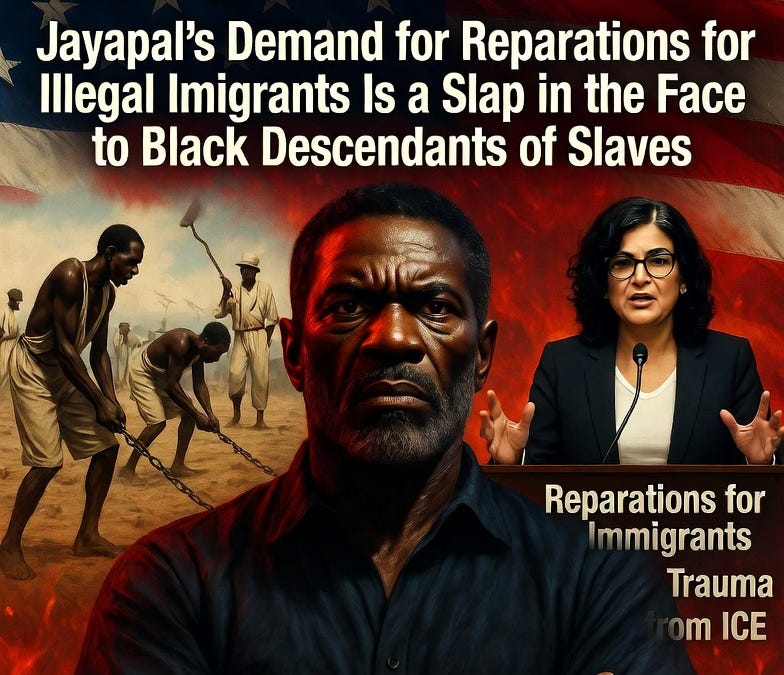
Jayapal’s Reparations for Illegal Immigrants Is an Insult to Black Descendants of Slaves
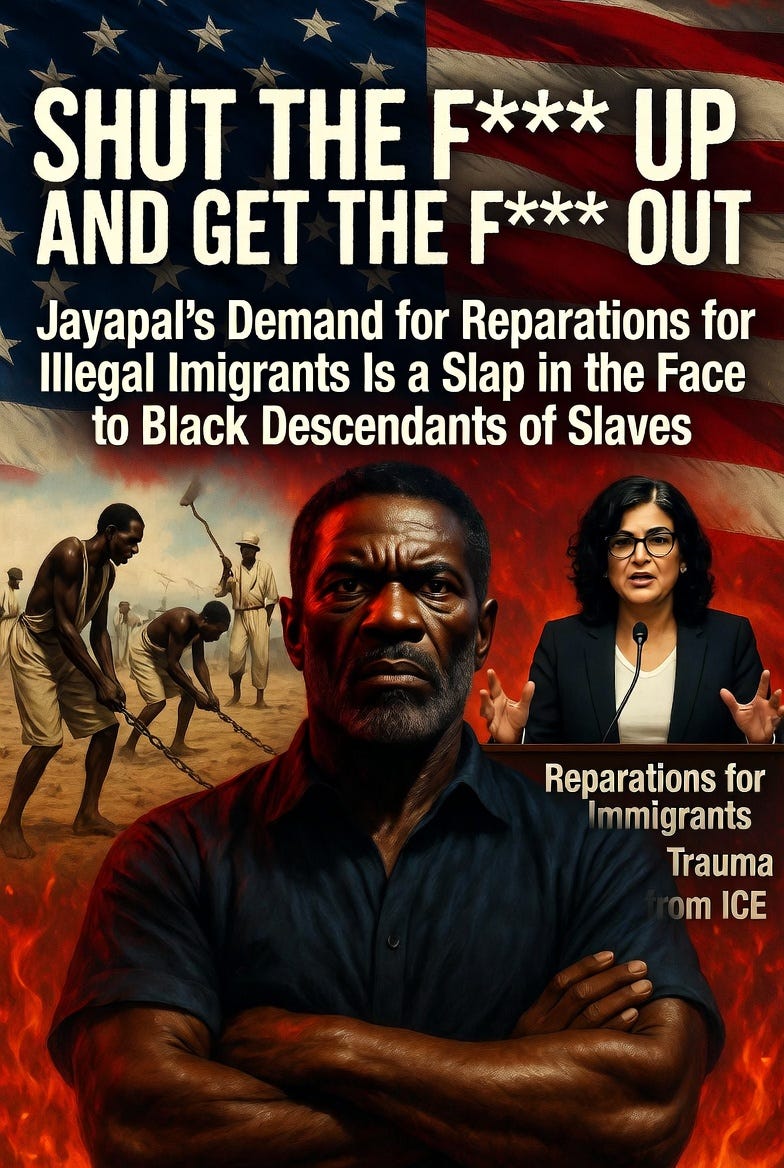
Pramila Jayapal’s statements on reparations for illegal immigrants has ignited fierce backlash among many Black Americans whose families trace their lineage directly to chattel slavery.
On March 27, 2026, during a congressional hearing titled “Kidnapped and Disappeared: Trump’s Attack on Children,” Rep. Pramila Jayapal (D-WA) demanded “some form of reparation” for illegal immigrants and their families allegedly “traumatized” by ICE enforcement under President Donald Trump’s mass deportation operations.
This push for reparations for illegal immigrants represents a profound insult to the unresolved historical debt owed to Black descendants of enslaved Africans. For 246 years of legal slavery, followed by decades of Jim Crow oppression, Black labor built much of America’s early wealth without compensation, while families were shattered, bodies brutalized, and opportunities systematically denied.
Consider the reality: Enslaved people were born into bondage on plantations across the South, including South Carolina, with no legal rights, no choice, and no escape from generational trauma. Their descendants marched, bled, and died for civil rights in places like Selma and Memphis, yet received no national reparations program—no “forty acres and a mule,” no comprehensive wealth transfer to close the gaps created by stolen labor, redlining, and discriminatory policies. The excuses have always been the same: too expensive, too divisive, time to move on.
Yet Rep. Jayapal—an immigrant from India who entered the United States legally and now serves in Congress—now advocates using American taxpayer dollars, including those from Black citizens, to compensate people who entered the country illegally and now face the consequences of law enforcement. Her exact words at the hearing: “We are going to have to have some form of reparation for the kids and the families that have been traumatized through all of this.”
Trauma? Try being born into generational poverty because your ancestors were treated as property. Try watching your community struggle while politicians prioritize people who cut the line and then demand payouts when laws are finally enforced.
Jayapal, as Ranking Member of the immigration subcommittee, used the hearing to criticize ICE tactics and signal that reparations for affected immigrant families would be pursued aggressively if Democrats regain control of Congress. She also called for outlawing for-profit private immigration detention and holding officials accountable.
Such rhetoric demands accountability for enforcing existing laws while ignoring the far deeper accountability owed for slavery and its aftermath. If government-induced trauma justifies reparations, the starting point must be the multi-generational harm inflicted on Black Americans who had no option to “go back” and whose contributions were extracted under duress.
Black communities built railroads, harvested crops, constructed infrastructure, and defended the nation in wars, all while facing legal subjugation. Any serious conversation about reparations must resolve the debt to descendants of American slaves first.
Black descendants of American slavery followed no voluntary “line” to enter this nation. Their ancestors were forcibly brought here in chains, treated as property, and forced to generate wealth for others while enduring unimaginable suffering. That unpaid labor and systemic denial of rights created lasting disparities that persist today.
In contrast, the individuals Jayapal seeks to compensate chose to cross U.S. borders without authorization. When immigration laws are enforced through ICE operations, the resulting “trauma” stems directly from those choices—not from centuries of institutionalized bondage.
Prioritizing payouts or benefits for such cases while the descendants of slaves continue to wait for meaningful restitution is a betrayal of historical justice. This stance highlights a troubling priority shift. Progressive voices frequently emphasize “systemic racism” and the lingering impacts of slavery on Black communities. Yet the same voices often elevate illegal immigrants as the more urgent victims deserving of resources, job competition, housing, and now potential reparations—resources that could otherwise address long-standing claims rooted in America’s original sin.
Until every last Black descendant of American slavery sees real reparations—cash, land, opportunity—there should be no reparations for anyone else. Not for illegal immigrants. Not for their “trauma.” Not on our watch.
Rep. Pramila Jayapal’s call for reparations for immigrants traumatized by deportation efforts should be rejected outright. It disrespects the memory of enslaved ancestors who endured real, inescapable chains and forced labor with no hearings, no apologies with substance, and no compensation.


